Türkçe
 Deutsch
 العربية
 Français
 Español




Volakas Marble: Geological Origins, Aesthetic Characteristics, and Analysis of Architectural Applications
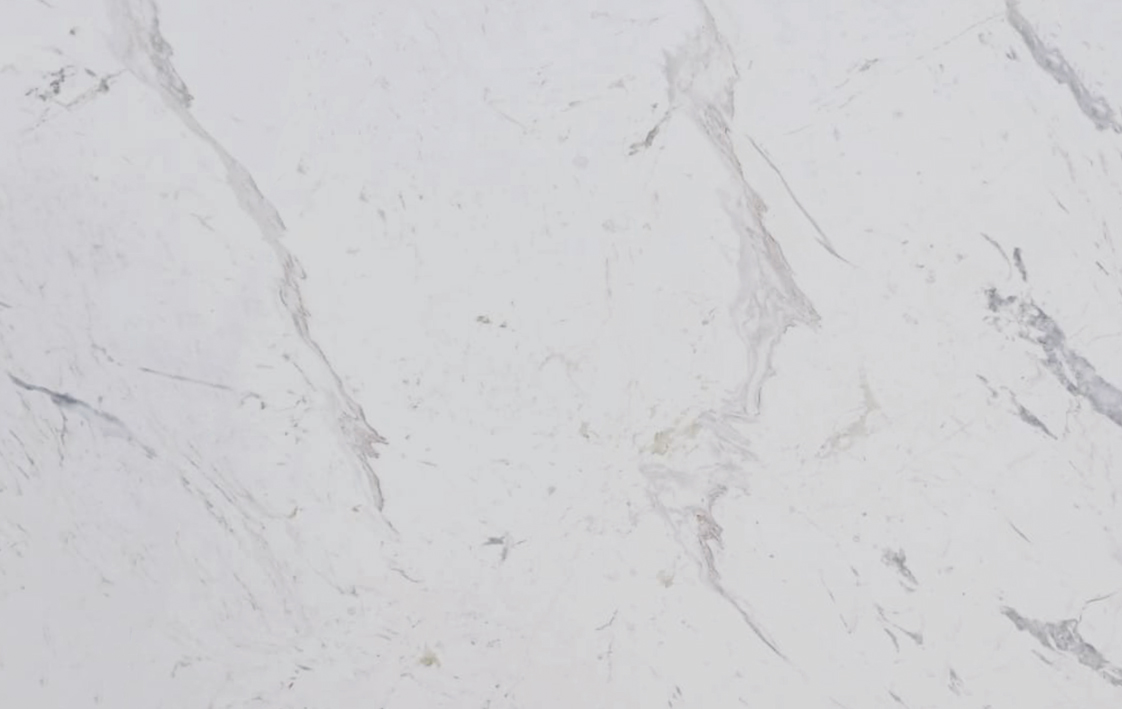
Volakas marble, one of the most renowned examples of the white dolomitic/calcitic marble group in international literature, is extracted from the Drama massifs in the northern region of Greece, specifically from basins such as Volakas, Vathilakos, Piges, and Granitis. Its geographical proximity to Turkey has ensured the material’s rapid integration into the Turkish market via road logistics, increasing its commercial accessibility.
Material Characteristics and Variations
Technically, Volakas marble is characterized by a fine-to-medium grain and a white background with vein structures that range from gray and beige to occasional purple tones. The aesthetic classification of this natural stone is defined by the movement of its veining.
- Diagonal (Classic) Volakas: Veins follow a distinct diagonal orientation across the slab.
- Cloudy (Flower) Volakas: A type where the vein structure is distributed in more circular and nebulous forms, featuring homogeneous transitions.
It is frequently preferred in architectural visualization processes because of the sense of depth and spaciousness created by these distinct veins against a white background.
Architectural Uses and Design Integration
Thanks to its homogeneous structure, Volakas marble is ideal for large-scale surface cladding. In “bookmatch” applications, for example, the symmetrical patterns created by tracking the veins are focal points in wall claddings and expansive floorings.
Common areas of use include:
- Interior floor and wall claddings
- Bathroom vanity and sink designs
- Fireplace surrounds
- Reception/welcome areas in prestigious residential, hotel, and office projects
Technical Constraints, Installation, and Maintenance Criteria
Although Volakas marble is highly aesthetic, its physical properties require careful technical consideration. Its porous structure results in a higher liquid absorption rate than some other types of marble.
- Stain Resistance and Protection: Its high absorbency makes it sensitive to water, oil, and acidic liquids (e.g., lemon, vinegar). If used in wet areas or on kitchen countertops, periodically applying surface protective chemicals (sealers/impregnators) is necessary.
- Installation Sensitivity: The adhesive used during installation must be carefully chosen. Due to its white and semi-translucent structure, dark-colored adhesives may cause “shadowing” or discoloration on the stone’s surface. Therefore, white, fast-drying, flexible adhesives specifically designed for natural stone are preferred.
- Usage Recommendation: For commercial floors with heavy foot traffic or in areas exposed to harsh chemicals, a honed surface finish is recommended to reduce the risk of scratching and acid etching.
Commercial Literature and Nomenclature
In the international natural stone market, Volakas marble may be referred to by various commercial names in technical specifications. These names usually vary based on vein density, the specific quarry of origin, or marketing strategies.
- International names include: Branco Volakas, Dramas White, Macedonian White, Jazz White, and Volakas Dolomite.
- Local Market Comparisons: Although Volakas is occasionally mentioned in the same segment as “Mugla White” or “Ibiza White” in literature, it distinguishes itself with its unique veining and origin.
In conclusion, when correct detailing, qualified craftsmanship, and regular maintenance protocols are followed, Volakas marble is a timeless cladding material that adds value to architectural projects.