
Granite
Granite
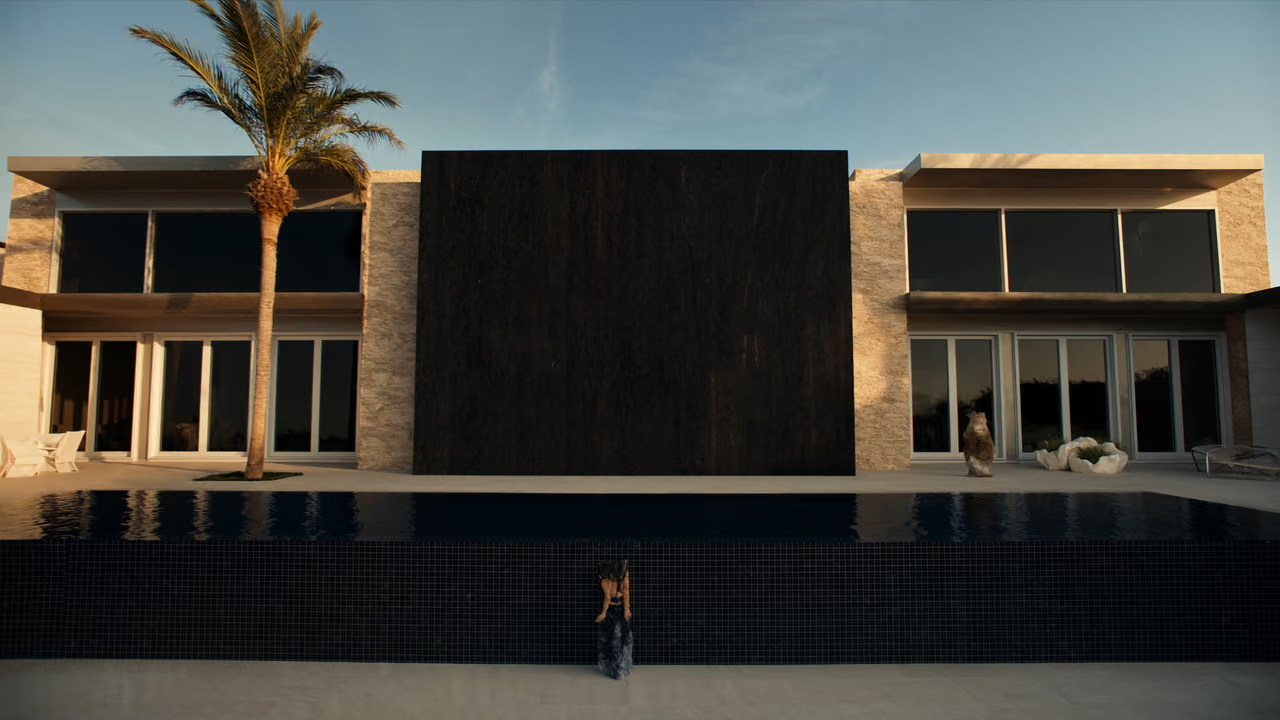

Black Leopard Granite
View Material →
Pedras Granite – Polished
View Material →
White Walker Granite
View Material →
White Walker – Cobblestones
View Material →
Desert Black Granite
View Material →
Star Galaxy Granite
View Material →
Paradiso Granite
View Material →
P White Granite
View Material →
Paradiso Granite
View Material →
Amazon Granite
View Material →
Rosa Beta Granite
View Material →
Rosa Minho Granite
View Material →
Imperial Red Granite
View Material →
Rosa Porinho Granite
View Material →
Aksaray Yaylak Granite
View Material →Technical Specification and Architectural Applications of Granite in Global Construction
What is Granite?
Granite is a phaneritic, intrusive igneous rock primarily composed of quartz, feldspar, and mica. Its formation occurs through the slow cooling of molten magma deep beneath the earth's crust over millions of years, resulting in a dense, crystalline structure that defines its mechanical superiority. This geological heritage provides the material with exceptional compressive strength and low porosity. For architects and developers, granite functions as a technical benchmark for high-traffic commercial applications due to its inherent resistance to mechanical abrasion and environmental stressors.
From a structural perspective, granite represents one of the most stable building materials available in the natural stone sector. Unlike sedimentary rocks, its interlocking mineral grains create a matrix that resists deformation under significant load. This makes it an essential specification for structural elements, heavy-duty flooring, and load-bearing architectural features. When evaluating materials for longevity, procurement managers prioritize granite for its ability to maintain surface integrity over decades of use. Since its extraction involves deep-earth quarrying, the material remains one of the most durable options for permanent urban infrastructure and large-scale public works.
Characteristics and Properties
Granite exhibits a robust physical profile characterized by high density, typically ranging from 2,600 to 2,700 kg/m³. Its mineralogical composition dictates its aesthetic range, spanning from neutral grays and whites to varied pink and orange tones. The presence of potassium feldspar often contributes to pinker hues, while a high concentration of quartz results in a translucent, white, or light gray appearance. These visual properties remain remarkably consistent throughout the block, allowing for predictable pattern matching in large-scale projects where visual continuity is a primary requirement.
Physical Performance and Material Comparison
When comparing granite to other natural stones, the primary technical distinction lies in its formation phase. Granite achieves higher hardness levels than marble, typically ranking between 6 and 7 on the Mohs scale. This translates to superior scratch resistance and lower maintenance requirements in high-utility areas. While marble reacts to acidic substances due to its calcium carbonate base, granite remains chemically inert in most architectural settings. This chemical stability ensures that surfaces do not etch when exposed to common household or industrial substances.
Furthermore, granite maintains structural stability under intense heat, making it a primary choice for high-heat environments like commercial kitchen installations or exterior areas exposed to direct solar radiation. Its low water absorption rate—often below 0.5%—prevents the internal pressure caused by freeze-thaw cycles, which is a common cause of failure in softer stones. For a deeper technical analysis of how these properties differ from other materials, refer to the Natural Stone Comparison Guide.
Popular Varieties from Turkey
Turkey hosts significant mineral deposits, particularly in regions known for their geological diversity. EfesusStone sources premium materials directly from extraction sites across the country, ensuring material consistency from the quarry to the job site. The following varieties represent the highest standard of Turkish and international granite production available through our facilities:
- Aksaray Yaylak Granite: Extracted from the Aksaray region, this stone is characterized by its consistent salt-and-pepper grain, making it a staple for large-scale municipal paving and commercial flooring.
- Pedras Granite: A high-density variant sourced from the Bergama/İzmir region, known for its uniform gray tones and exceptional performance in exterior cladding.
- S Black Granite: A sophisticated, dark-toned stone often specified for high-end lobby interiors and feature walls where deep color saturation is required.
- White Walker Granite: Favored for its bright, clean aesthetic, this variety provides a modern alternative to traditional gray granites while maintaining industrial-grade durability.
- Desert Black Granite: A structurally dense stone that offers a stark, monochromatic finish, ideal for minimalist architectural designs and heavy-duty thresholds.
- Absolute Black: A premium material offering total color uniformity, essential for high-contrast architectural designs and luxury retail environments.
Applications and Use Cases
Granite performs reliably across both interior and exterior environments. In residential and commercial interiors, it serves as the standard for countertops, bathroom vanities, and high-traffic flooring. The material's resistance to impact makes it suitable for stair treads and lobby areas where heavy foot traffic is expected. For large-format applications, procurement managers should specify our Granite Slabs collection to ensure color consistency and structural integrity across wide surface areas.
Interior and Commercial Integration
Interior designers often select granite for its hygienic properties. Because the stone is non-porous when properly finished, it does not harbor bacteria or moisture, which is critical for healthcare facilities and food preparation areas. In office receptions and retail spaces, granite provides a high-end finish that resists the scuffing and abrasive wear typical of commercial environments. The stone's ability to withstand heavy loads also makes it the primary choice for pedestals, reception desks, and interior columns. Its stain-resistant nature ensures that high-use surfaces remain pristine with minimal intervention.
Exterior and Landscape Engineering
Exterior applications utilize granite's ability to withstand thermal expansion and moisture penetration. It is frequently applied in facade cladding, pool surrounds, and landscaping. For these outdoor environments, specific finishes are required to maintain safety standards and slip resistance. The use of Granite Blocks remains the preferred route for custom architectural elements, allowing for precise fabrication according to complex project designs such as urban monuments, heavy-duty paving units, or bridge components. Its resistance to environmental pollutants and acid rain makes it a superior choice for urban facades compared to more porous sedimentary stones.
Finish Options and Technical Specifications
Granite surfaces can be processed to meet diverse functional requirements. Selection of the correct finish is paramount to project safety and aesthetic longevity. Standard finish options include:
- Polished: A high-gloss finish that highlights the crystalline structure and deepens the natural color. Best suited for wall cladding and low-traffic decorative surfaces.
- Honed: A smooth, matte finish with low reflectivity, suitable for interior flooring where a contemporary look is desired without the glare of a polished surface.
- Flamed: A thermal treatment that creates a rough, non-slip texture. This is the industry standard for exterior public walkways and staircases.
- Brushed: A textured finish achieved with abrasive brushes that emphasizes the natural grain of the stone while providing a tactile surface.
- Leathered: A soft, tactile finish that offers a slightly pebbled texture, effectively hiding fingerprints and water spots in high-use areas like countertops.
Standard thicknesses for slabs are calibrated at 2cm and 3cm. For heavy-duty paving or structural components, custom thicknesses can be produced from raw blocks. Industrial extraction utilizes diamond wire sawing to ensure block dimensions remain within the 2.5 to 3.2-meter range, facilitating efficient processing and high-yield slab production.
Care and Maintenance
While granite is highly durable, professional maintenance protocols ensure its longevity. Periodic sealing is recommended, particularly for lighter-colored varieties, to prevent oil and organic liquid penetration. Daily cleaning requires only neutral pH cleaners; avoid harsh acidic or abrasive agents that may degrade the surface finish over time. Unlike marble, granite does not require frequent crystallization treatments, making it a cost-effective choice for long-term facility management.
For high-traffic commercial areas, a preventative maintenance schedule should be implemented. This includes the immediate removal of spills and the use of walk-off mats at entrances to reduce the amount of abrasive grit tracked onto the stone surface. If a surface becomes dull after years of heavy use, it can be professionally re-polished or re-honed on-site to restore its original appearance. The inherent hardness of the stone means that such restoration is rarely needed if basic cleaning protocols are followed.
Why Source from EfesusStone?
EfesusStone provides direct access to high-quality extraction sites, ensuring that procurement managers receive consistent material batches. Since 1943, we have refined our quality control processes, including block-by-block inspection to identify micro-fissures or mineral inclusions before processing begins. Our heritage in the Turkish stone industry allows us to navigate complex logistics and technical requirements for international projects.
Our logistics department manages the full export cycle, utilizing A-frame bracing for maritime transit to ensure that materials arrive at the site without structural failure. We provide comprehensive documentation for every shipment, including technical data sheets and origin certificates, allowing for transparent tracking from the quarry face to the final destination. Whether you require raw Granite Blocks for local fabrication or finished slabs for immediate installation, our facility ensures precision cutting and finishing to meet architectural tolerances.
Frequently Asked Questions
Supply Notes
Sizing, finishing and selection support.
Custom sizes
Coordinate availability, production details and documentation with the Efesus Stone team.
Project finishes
Coordinate availability, production details and documentation with the Efesus Stone team.
Export packing
Coordinate availability, production details and documentation with the Efesus Stone team.