
Onyx / Slabs
Onyx Slabs

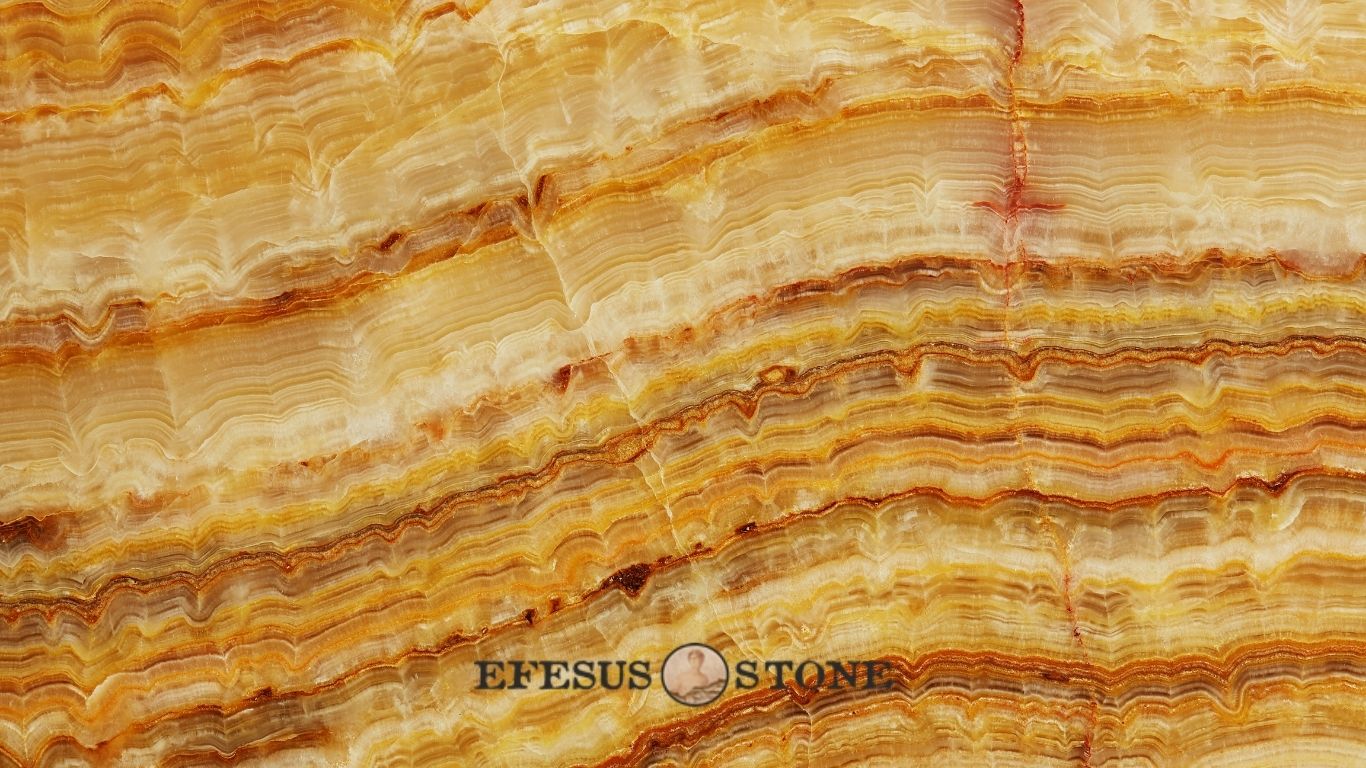
Afyon White Marble Onyx Slab
View Material →
Tiger Onyx Slab
View Material →
Bubble Onyx Slab
View Material →
Cappuccino Onyx Slab
View Material →
Velluto Onyx Slab
View Material →
Gold Onyx Slab
View Material →
Coca Cola Onyx Slab
View Material →
Satin Onyx Slab
View Material →
Salmon Onyx Slab
View Material →
White Onyx Slab
View Material →
Dark Desert Rose Onyx Slab
View Material →
Light Desert Rose Onyx Slab
View Material →Architectural Sourcing Guide for Onyx Slabs
Geological Composition and Translucent Properties of Onyx Slabs
Onyx is a rare cryptocrystalline natural stone composed primarily of parallel bands of chalcedony and calcite minerals. Formed in cold spring waters or cave environments through the slow deposition of silica and calcium carbonate, this stone possesses a unique crystalline structure that allows light to pass through. Sourcing premium onyx slabs requires a clear understanding of block origins, mineral composition, and aesthetic variations. High-quality extraction sites yield blocks that are processed into premium slabs for feature walls, backlit countertops, and luxury reception areas.
Selecting premium onyx materials is a key decision for commercial and high-end residential interior designs. For example, the spectacular Blue Ice Onyx Slab provides a striking cool palette with soft grey and blue bands that create a dramatic focal point. For warm, desert-inspired spaces, the Dark Desert Rose Onyx Slab and the lighter Light Desert Rose Onyx Slab offer intricate crystalline patterns with amber and cream tones that glow beautifully when backlit. For contemporary B2B applications, the Silver Onyx Slab introduces a modern grey and silver movement, perfect for corporate lobbies. Sourcing consecutive bundles of these onyx slabs ensures outstanding pattern continuity across large architectural surfaces.
The mechanical properties of onyx determine its suitable applications. Composed primarily of calcite, onyx has a hardness rating of 3 on the Mohs scale. This makes it softer and more fragile than granite or marble. Under structural engineering tests, premium onyx shows a compressive strength ranging from 50 to 75 MPa. Due to its cryptocrystalline nature, the stone has a low density and must be handled with care during fabrication. Procurement managers verify these technical properties to align material choices with structural load-bearing and protection requirements.
Format Standards and Thickness Tolerances in Project Sourcing
Specifying stone products requires strict adherence to thickness standards. Nominal thickness standards for onyx slabs dictate nominal thicknesses of 2 cm and 3 cm. Because of the delicate nature of onyx, 2 cm slabs are commonly backed with fiberglass mesh or laminated to glass or acrylic panels to increase structural strength. For freestanding partitions or heavy countertops, 3 cm slabs are specified to ensure structural integrity under environmental loads.
Slab sizes depend on the size of the quarry block and gang saw limits. Because onyx blocks are typically smaller than marble or granite blocks, standard onyx slabs measure between 180 cm to 260 cm in length and 110 cm to 150 cm in height. These dimensions are ideal for creating bookmatched feature panels. Before ordering, architects must verify the maximum yield of each slab to align joint placements with structural grids and minimize fabrication waste. Uniform thickness across the entire bundle is essential to prevent installation issues.
Surface Finishes and Backlighting Techniques
Surface treatment plays a critical role in both slip resistance and light reflection. A polished finish is the standard treatment for onyx, as it provides maximum light reflection and highlights the natural color depth and mineral crystal structures of the stone. For areas requiring a more muted appearance, a honed surface offers a satin-like texture. Because onyx is primarily used for vertical features and decorative panels, textured finishes like flamed or sandblasted are rarely applied.
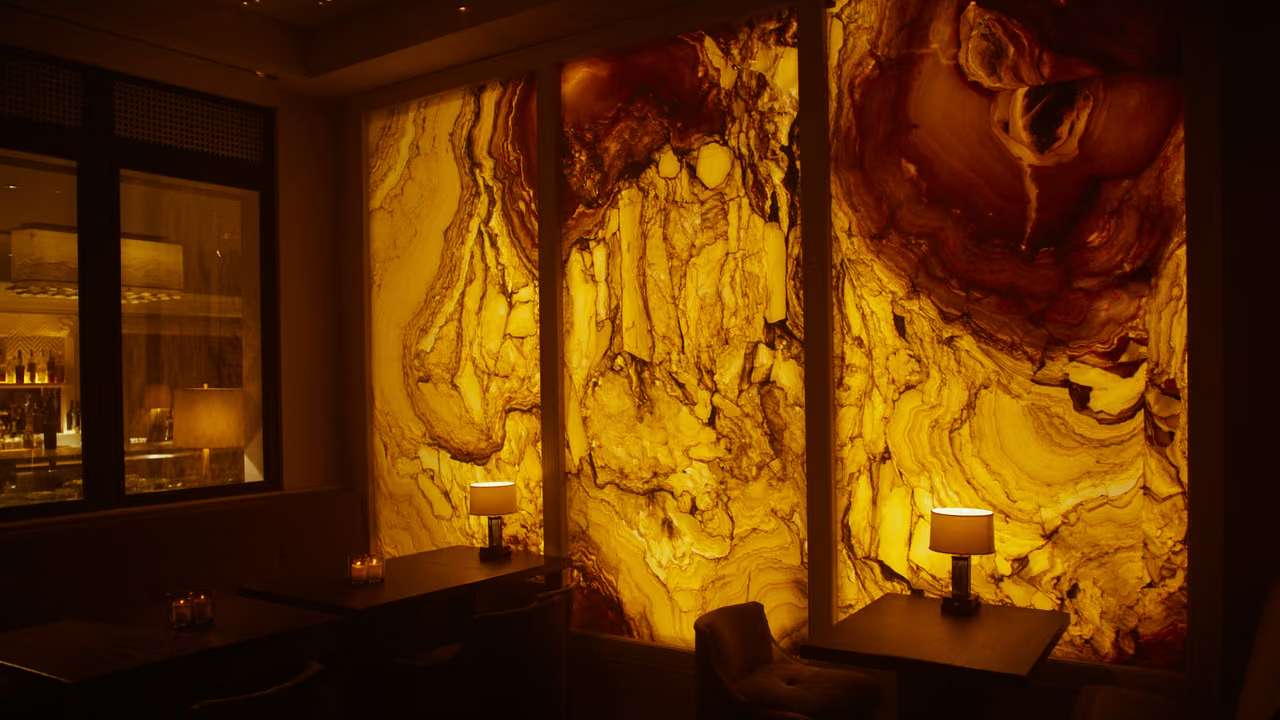
The most critical B2B decision is coordinating the lighting design with the slab selection. Backlighting onyx surfaces with LED panels highlights the translucent mineral layers, creating a stunning visual effect. In contrast, unlit onyx relies on natural light to showcase its rich surface patterns. For comprehensive comparison parameters, professionals refer to technical documentation. Consulting a Natural Stone Comparison Guide: Marble vs. Travertine vs. Granite helps clarify the mechanical differences between these material classes, assisting designers in identifying the proper material family for specific installations.
Procurement Strategies for Luxury Commercial Projects
Purchasing material for large-scale projects involves careful inspection of individual bundles. Wholesalers and contractors should request detailed lot photos or visit the slab yard to inspect the raw material. Since natural stone varies from block to block, selecting consecutive onyx slabs from the same block ensures pattern continuity and color consistency. When bookmatching or blending panels for feature walls, selecting adjacent cuts is necessary to achieve visual symmetry.
Material estimation must account for fabrication waste and cutouts. Standard waste factors range from 15% to 20% for typical layouts, but complex projects with backlit details may require more. Sourcing from experienced suppliers ensures that slab thickness remains uniform, reducing onsite installation problems. Wooden bundles are secured with steel straps to prevent movement during international ocean freight shipping. Additionally, reading Onyx Marble Redefines Luxury provides an overview of how onyx serves as a premier design element in modern architecture.
Maintenance and Long-Term Durability Protocols
Preserving the surface quality of natural stone requires correct maintenance protocols. Although onyx is highly valued for its beauty, it is sensitive to acids and abrasive cleaners. Maintenance teams must specify pH-neutral stone cleaners for daily care. Applying a high-quality penetrating impregnating sealer during installation helps retard liquid absorption and prevent staining.
Regular resealing is necessary to maintain stain resistance on active surfaces. High-traffic commercial installations may require resealing every six months, while residential surfaces can go longer. In cases where etching or scratching occurs, professional restoration teams can polish the stone back to its original finish.
Why Choose Onyx Slabs from EfesusStone
EfesusStone has been a leading manufacturer and exporter of Turkish and international natural stone since 1943. We operate state-of-the-art processing facilities that combine traditional craftsmanship with advanced technology. Our B2B services include custom fabrication, strict quality control inspection, and secure export packaging. By controlling the supply chain from our quarries to final delivery, we guarantee the highest quality standards for every shipment of onyx slabs. Our technical team assists architects with selection, layout coordination, and custom dimensioning to ensure project success.
Frequently Asked Questions
Related formats
Related stones
Supply Notes
Sizing, finishing and selection support.
Custom sizes
Coordinate availability, production details and documentation with the Efesus Stone team.
Project finishes
Coordinate availability, production details and documentation with the Efesus Stone team.
Export packing
Coordinate availability, production details and documentation with the Efesus Stone team.