
Basalt
Basalt


Basalt Technical Guide: Engineering Performance and Architectural Applications
What is Basalt?
Basalt is a primary extrusive igneous rock formed through the rapid cooling of magnesium-rich and iron-rich lava at the Earth's surface. Geologically, it is classified as a mafic rock, containing high concentrations of plagioclase feldspar and pyroxene. Because the cooling process occurs quickly, mineral crystals lack the time to grow large, resulting in a fine-grained or aphanitic texture. This dense molecular structure provides the material with its characteristic hardness and durability, which are critical metrics for large-scale architectural projects.
From a structural engineering perspective, basalt functions as a high-performance alternative to sedimentary stones like limestone. Its volcanic origin ensures a material that is naturally resistant to chemical weathering and mechanical stress. For procurement managers and architects, understanding this geological foundation is essential when specifying materials for high-traffic commercial environments or harsh exterior climates where longevity is the primary requirement. While often grouped with other natural stones in building literature, basalt possesses a distinct chemical profile that allows it to withstand environmental pressures that would degrade softer materials over time.
Characteristics and Properties
Basalt is characterized by a deep, uniform color palette ranging from medium gray to charcoal and absolute black. While the initial appearance is often dark and consistent, oxidation of iron minerals within the stone can occasionally produce warm brown or rust-red tones over time if left untreated. This mineralogical shift is a natural characteristic of volcanic rocks and should be factored into the long-term aesthetic planning of a facade or landscape project. Unlike stones with high translucency, basalt is opaque and provides a solid, grounding presence in architectural design.
Technically, basalt outperforms many other natural stones in several key categories:
- Compressive Strength: Basalt typically exhibits a compressive strength exceeding 200 MPa, making it suitable for load-bearing applications and heavy-duty industrial flooring.
- Low Porosity: With a water absorption rate usually below 1%, it provides exceptional resistance to freeze-thaw cycles and staining.
- Density: Its high specific gravity (approximately 2.8 to 3.0 g/cm³) ensures a stable and robust installation, though this requires careful logistics planning regarding container weight limits.
- Thermal Properties: Basalt has high thermal mass and is frequently used in heat storage systems and as a raw material for stone wool insulation due to its ability to withstand extreme temperatures.
In comparison to other magmatic rocks, basalt offers a more homogeneous appearance. This uniformity allows architects to achieve clean, precise lines and consistent surface areas, which is often difficult with the varied crystalline patterns found in granite. Its resistance to high pressure and mechanical wear makes it a superior choice for urban infrastructure and high-traffic public zones.
Popular Varieties from Turkey
Turkey hosts significant volcanic deposits, with major quarrying operations located in the regions of Kayseri, Gaziantep, Diyarbakır, and the Aegean corridor near Aliağa/İzmir. These regions produce basalt varieties that are globally recognized for their homogeneity and structural integrity. Unlike the softer volcanic stones found in other regions, Turkish basalt is favored for its fine-grained matrix and suitability for precision machining. Efesus Stone manages the extraction and processing of premium basalt selections to ensure consistent quality for international projects.
Our current production includes the following specialized selections:
- Calimero Basalt: A versatile gray variety known for its consistent texture and excellent response to thermal finishing.
- Gargamel Basalt: A darker, more intense basalt often specified for high-end interior cladding and luxury retail flooring.
- Calimero Basalt Cobblestones: Specifically fabricated for high-traffic exterior paving and historical restoration projects.
- Kayseri Gray: Extracted from Central Anatolia, this variety is a staple for municipal paving projects due to its extreme abrasion resistance and reliable availability in large volumes.
- Diyarbakır Black: A dense, dark basalt often used for high-contrast architectural details, monument fabrication, and precision-cut urban furniture.
Applications and Use Cases
In commercial architecture, basalt serves as a reliable specification for high-traffic zones. Its ability to maintain structural integrity under constant mechanical friction makes it ideal for airport terminals, hotel lobbies, and public plazas. The stone's neutral gray and black tones provide a sophisticated backdrop that complements modern glass and steel assemblies. Procurement teams often choose this material for projects requiring a 'rustic' yet modern aesthetic, as it bridges the gap between historical texture and contemporary minimalism.
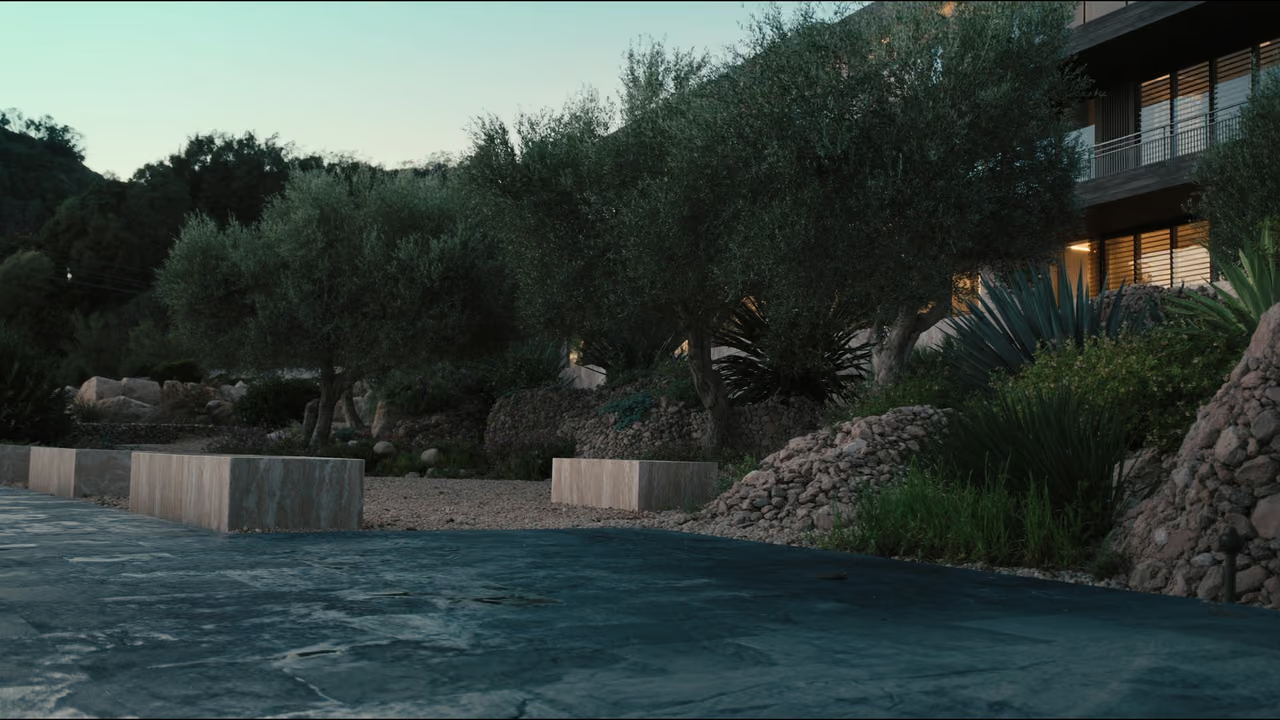
For exterior applications, basalt is a preferred material for ventilated facades and landscaping. Its resistance to UV radiation ensures that the color does not fade over decades of exposure. Designers frequently utilize Calimero Basalt Cobblestones for driveways and pedestrian walkways where slip resistance and weight-bearing capacity are paramount. The material is also processed into large formats for specialized use; for large-scale surfacing projects, review our inventory of Natural Stone Blocks which are processed into custom dimensions.
In residential and hospitality interiors, basalt is increasingly specified for areas subject to thermal stress. It is frequently used for custom kitchen islands, fireplace surrounds, or outdoor barbecue stations due to its heat-resistant properties. The stone's low water absorption also makes it suitable for wet areas and bathroom cladding, provided the correct finish is applied to manage slip resistance. For those evaluating material properties for home use, it is helpful to You must know marble's properties before using it at home to understand how volcanic stones like basalt differ from metamorphic options.
Finish Options and Technical Specifications
The surface finish of basalt determines not only the visual impact but also the functional performance of the stone. At Efesus Stone, we provide several industrial-standard finishes to meet diverse project requirements:
- Honed: A smooth, matte surface that brings out the deep gray tones without the reflection of a polish. Ideal for interior flooring and wall cladding.
- Flamed: A thermal process that causes the surface crystals to pop, creating a rough, non-slip texture perfect for exterior paving and public walkways.
- Bush-hammered: A mechanical finish that produces a uniformly pitted surface, offering the highest level of traction for wet areas and ramps.
- Polished: While less common for basalt than marble, a polished finish creates a high-gloss, sophisticated look suitable for feature walls.
- Brushed/Leathered: Combines a slight texture with a soft sheen, providing a tactile surface that hides fingerprints and water spots effectively.
Standard thickness for basalt production includes 2cm and 3cm for slabs and tiles, which are the industry benchmarks for most architectural applications. Custom thicknesses up to 10cm are available for specialized elements such as curbs, steps, or heavy-duty industrial flooring. Tiles are typically calibrated to a tolerance of +/- 1mm to ensure precision during installation, minimizing lippage and ensuring a flat surface.
Care and Maintenance
While basalt is exceptionally durable, professional maintenance is required to preserve its aesthetic value and prevent long-term mineral changes. For interior installations, applying a high-quality impregnating sealer is recommended to protect against oil-based stains, particularly in food preparation areas. Because basalt contains iron, it can be sensitive to highly acidic cleaners which may react with the mineral content or etch the surface. To maintain the integrity of the finish, users should refer to technical guides on How to Get Rid of Marble Stains? for general stone cleaning principles.
For exterior basalt paving, regular pressure washing is usually sufficient to remove surface debris. In areas prone to heavy foot traffic, re-sealing every 3-5 years helps maintain the stone's resistance to moisture penetration and prevents the accumulation of grime in textured finishes like flamed or bush-hammered surfaces. Specific care must be taken to avoid the use of hydrofluoric acid or strong bleaching agents, as these can cause irreversible damage to the stone's molecular structure.
Why Source from Efesus Stone?
Established in 1943, Efesus Stone maintains a legacy of technical expertise in the Turkish natural stone sector. We control the supply chain from the quarry face to the final export crate, ensuring that every shipment of basalt meets international quality standards. Our facilities utilize diamond wire cutting and multi-head polishing lines to achieve the dimensional accuracy required for complex architectural drawings. We prioritize the grading process, ensuring that color consistency and structural soundness are verified before the stone leaves our facility.
We understand the logistical challenges of basalt procurement, particularly regarding its high density and weight. Our export team manages weight-optimized loading and utilizes reinforced packaging to prevent breakage during transit. By partnering with Efesus Stone, wholesalers and contractors gain access to consistent material lots and professional grading that minimizes waste on the job site. Our long-standing presence in the industry allows us to provide technical consultation on stone selection, ensuring that the chosen basalt variety aligns with the specific mechanical requirements of your project.
Frequently Asked Questions
Supply Notes
Sizing, finishing and selection support.
Custom sizes
Coordinate availability, production details and documentation with the Efesus Stone team.
Project finishes
Coordinate availability, production details and documentation with the Efesus Stone team.
Export packing
Coordinate availability, production details and documentation with the Efesus Stone team.