
Countertops
Sintered Stone Porcelain Countertop
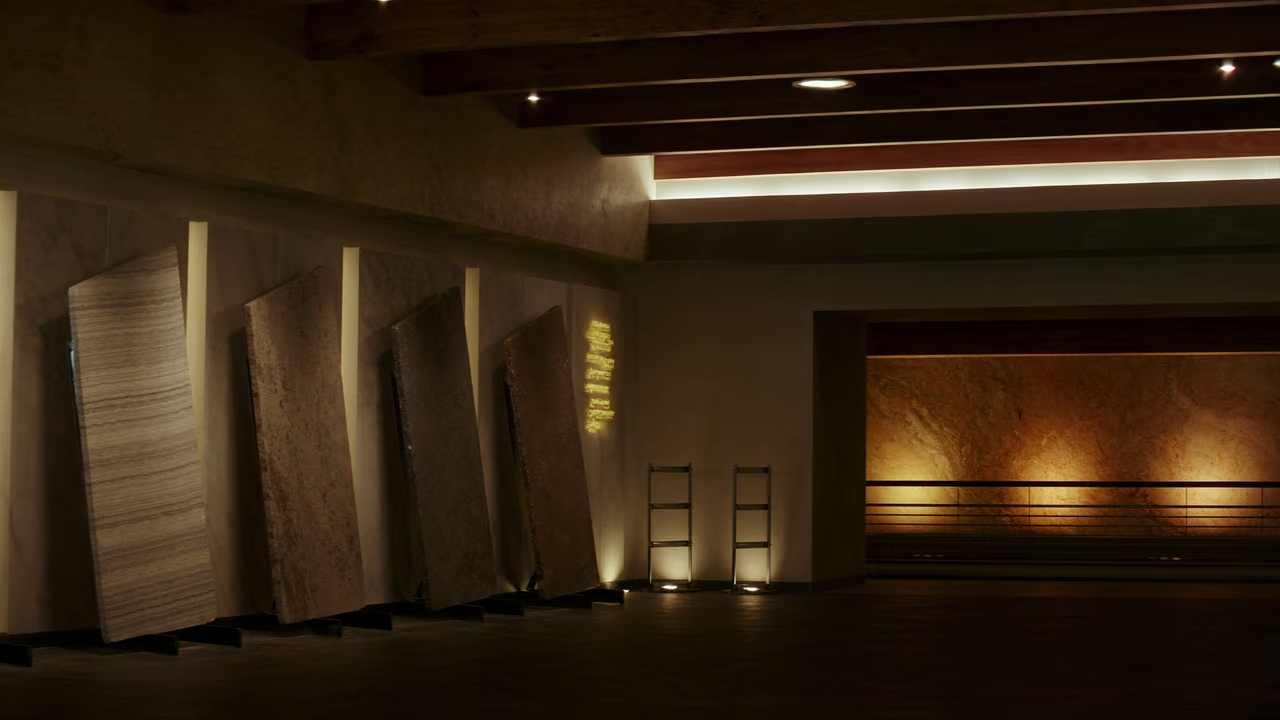

Amazonite Porcelain Countertop | Sintered Stone
View Material →
Patagonia Porcelain Countertop | Sintered Stone
View Material →
Azul Macoubas Porcelain Countertop | Sintered Stone
View Material →
Azul Macobus Porcelain Countertop | Sintered Stone
View Material →
Van Gogh Blue Porcelain Countertop | Sintered Stone
View Material →
Alps Blue Porcelain Countertop | Sintered Stone
View Material →
Ice Jade Porcelain Countertop | Sintered Stone
View Material →
Serpegiante Light Porcelain Countertop | Sintered Stone
View Material →
Silk White Porcelain Countertop | Sintered Stone
View Material →
Pure White Porcelain Countertop | Sintered Stone
View Material →
Ivory Travertine Porcelain Countertop | Sintered Stone
View Material →
Nero Marquina Porcelain Countertop | Sintered Stone
View Material →
Panda White Porcelain Countertop | Sintered Stone
View Material →Sourcing Sintered Stone Porcelain Countertop: B2B Procurement Guide
Sourcing Sintered Stone Porcelain Countertop: B2B Guide
Sintered stone porcelain countertops represent a high-performance solution for commercial and residential architectural projects. This material consists of natural minerals processed under extreme pressure and high temperatures, resulting in a non-porous surface with superior mechanical strength. For procurement managers and architects, these surfaces provide a consistent alternative to natural stone, ensuring uniformity across large-scale installations where maintenance requirements must remain minimal.
Technical Specifications and Selections
Efesus Stone supplies a diverse range of aesthetic profiles within the sintered stone category. High-demand options include the Glacier White 10001 for minimalist commercial interiors and the Nero Marquina 10001 for high-contrast hospitality designs. For projects requiring specific visual textures, the Ivory Travertine Porcelain 10001 offers a controlled aesthetic that mimics natural sedimentary structures without the porosity inherent in traditional travertine.
Technical standards for these slabs typically involve thicknesses of 1.2 cm for standard countertop applications and 2.0 cm for heavy-duty work surfaces. Slab dimensions often reach 320 x 160 cm, allowing for expansive layouts with fewer grout lines. Finish options range from high-gloss polished surfaces to matte and textured grips, depending on the friction coefficient requirements of the project site.
Maintenance and Sourcing Advantages
The non-porous nature of a sintered-stone-porcelain-countertop eliminates the need for chemical sealants. Routine maintenance requires only pH-neutral detergents and water, as the material resists absorption of liquids and acidic substances. Unlike some natural stones, these slabs are UV-stable and resistant to thermal shock, making them suitable for both indoor and outdoor applications.
When sourcing from Efesus Stone, wholesalers and contractors benefit from 80 years of industry experience. We manage the entire logistics chain from our production facilities, ensuring that technical tolerances meet international standards. For professionals comparing these engineered surfaces with traditional materials, our Natural Stone Comparison Guide: Marble vs. Travertine vs. Granite provides additional context on performance metrics across different surface types.
Frequently Asked Questions

Supply Notes
Sizing, finishing and selection support.
Custom sizes
Coordinate availability, production details and documentation with the Efesus Stone team.
Project finishes
Coordinate availability, production details and documentation with the Efesus Stone team.
Export packing
Coordinate availability, production details and documentation with the Efesus Stone team.