
Onyx
Onyx
Onyx Stone: A beautiful natural stone for your home
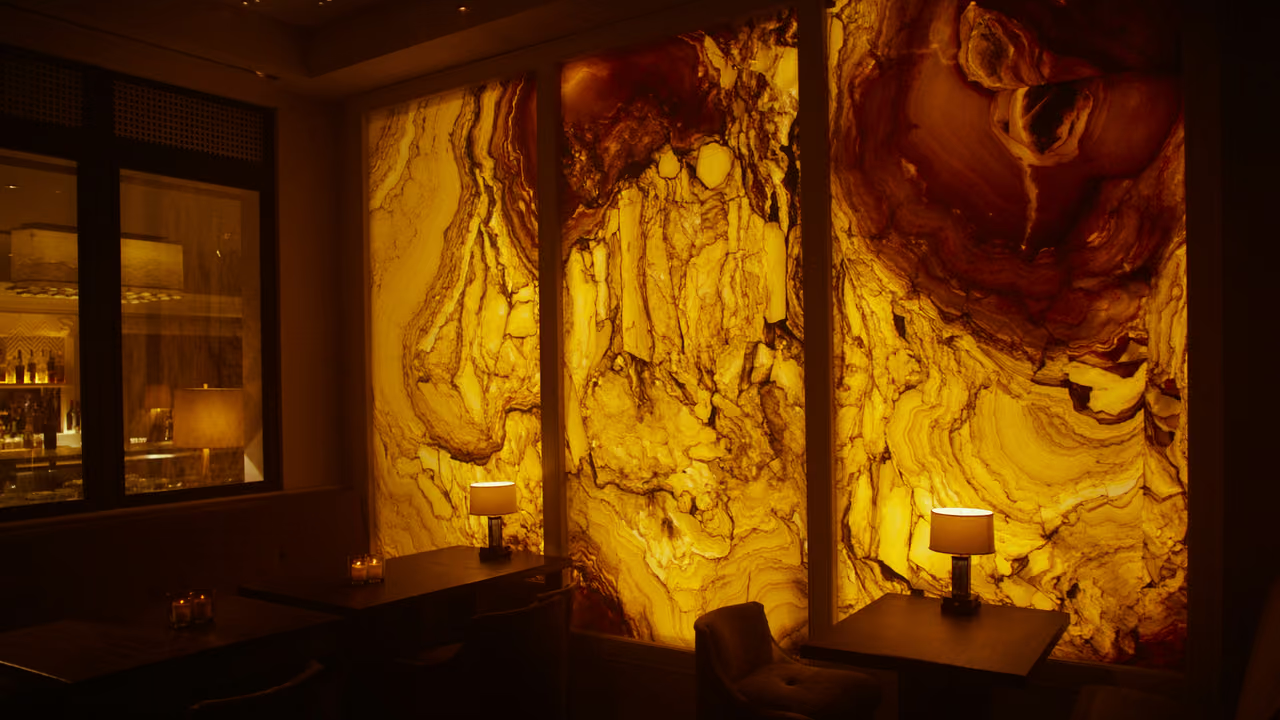

Tiger Onyx
View Material →
White Onyx Gemstone
View Material →
Bubble Onyx
View Material →
Cappuccino Onyx
View Material →
Velluto Onyx
View Material →
Gold Onyx
View Material →
Coca Cola Onyx
View Material →
Satin Onyx
View Material →
Salmon Onyx
View Material →
White Onyx
View Material →
Dark Desert Rose Onyx
View Material →
Light Desert Rose Onyx
View Material →Technical Guide to Turkish Onyx: Geological Properties and Specification Standards
What is Onyx?
Onyx is a translucent, banded variety of calcite, a carbonate mineral formed through the slow precipitation of calcium carbonate from cold water springs or groundwater. Unlike standard limestone or marble, which form through the lithification of marine sediments or the metamorphism of existing carbonate rocks, onyx originates in terrestrial environments. Mineral-rich waters deposit layers of calcite in successive bands over millennia, creating a dense, crystalline structure. This specific formation process grants the material its defining property: diaphaneity, or the ability to transmit light through its mass.
From a procurement perspective, the industry classifies onyx as a semi-precious stone. While commercial catalogs sometimes group it with marble due to its calcium carbonate base, its mineral density and light-transmission capabilities distinguish it as a specialized architectural material. Architects specify this stone for high-end interior features where the surface serves as both a structural element and a medium for lighting design. Understanding the chemical composition of these mineral layers is essential for successful project integration and long-term performance.
Characteristics and Properties
Onyx possesses a physical profile that dictates specific handling and installation protocols. The material is primarily composed of calcium carbonate, though it contains varying trace minerals like iron oxides that create its characteristic color bands. On the Mohs scale of mineral hardness, calcite-based onyx typically registers between 3 and 4. This indicates a surface that is softer than granite or quartzite, making it susceptible to scratching and abrasion. Professional handling during the cutting and polishing stages is a requirement to prevent surface damage or micro-fracturing.
Translucency remains the primary technical parameter for specification. The degree to which a slab permits light transmission depends on the thickness of the cut and the concentration of impurities within the mineral layers. Porosity is another critical factor; onyx is a porous material with a measurable moisture absorption rate. This necessitates the use of high-performance chemical sealants to prevent staining and etching from acidic substances. When compared to other natural stones, onyx offers less structural rigidity but provides an aesthetic depth that igneous rocks cannot replicate, particularly when configured with integrated backlighting systems.
Popular Varieties from Turkey
Turkey maintains a dominant position in the global market due to extensive deposits in historically significant quarrying regions. Efesus Stone manages extraction and processing from key areas including the Emirdag district in Afyon, as well as Bilecik and Cappadocia. These regions produce variations that range from high-purity whites to deep, earth-toned ambers. These materials are extracted as Onyx Blocks and processed into slabs using precision diamond-wire saws to maintain structural integrity.
Specific varieties available for commercial specification include:
- Afyon White Marble Onyx 1001: A high-purity calcite stone from the Afyon region, prized for superior translucency and a clean, white aesthetic.
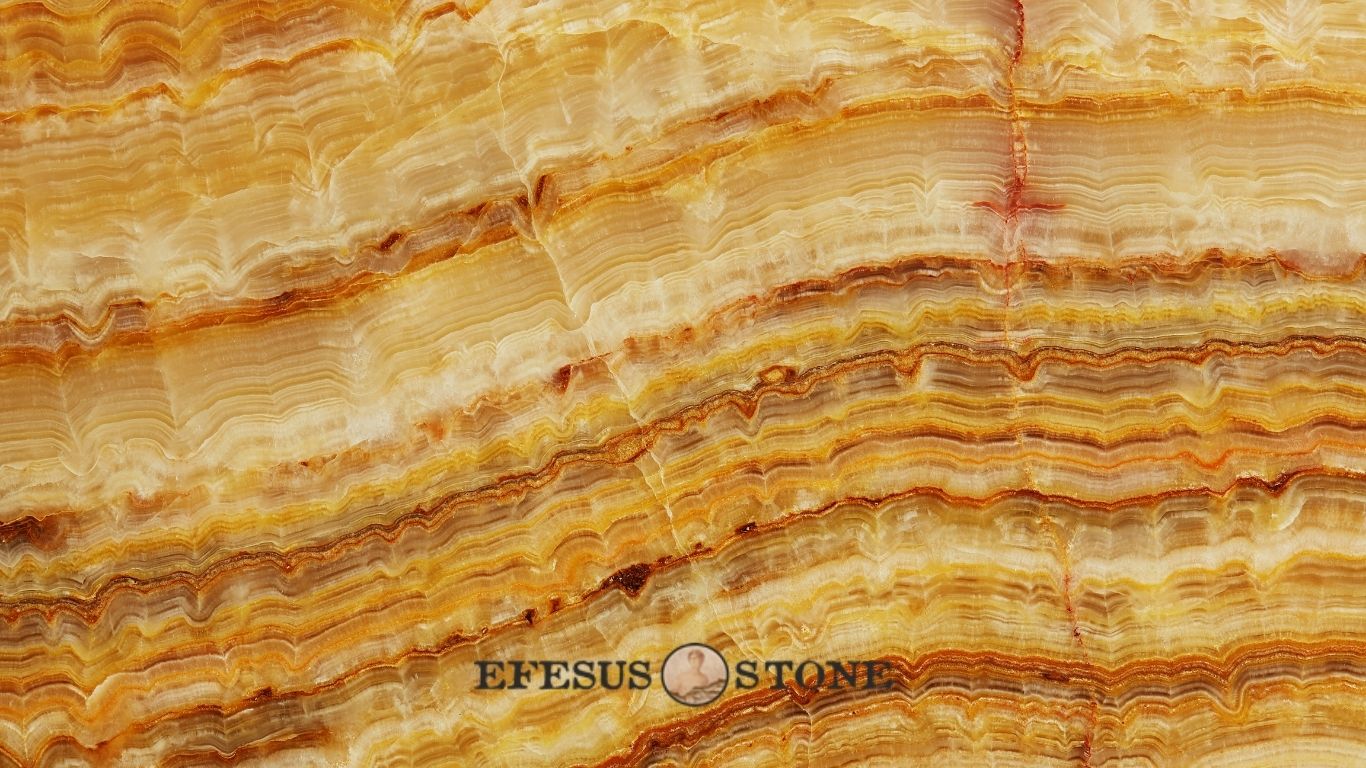
- Honey Onyx: Characterized by warm amber tones and concentric banding, frequently specified for hospitality reception desks.
- Silver Onyx: Features cool grey and metallic-toned veins, providing a contemporary alternative to traditional warm-toned varieties.
- Bubble Onyx: Recognized by unique circular mineral formations that create a distinct visual texture when illuminated.
- Cappuccino Onyx: Offers a sophisticated palette of cream and light brown, ideal for integrated wall systems in executive boardrooms.
- Satin Onyx: Known for smooth, linear banding and consistent color distribution across large-scale book-matched installations.
Because these are natural materials, color transitions between blocks are expected. Procurement managers should review entire production lots to ensure the project maintains visual continuity. Sourcing blocks directly allows for custom slab thickness and finish selection tailored to specific structural requirements. For more information on regional variations, read our analysis on Where is the Best Marble Mined in Turkey?.
Applications and Use Cases
Onyx is primarily an interior material, favored for areas where visual impact and luxury branding are priorities. In commercial sectors, it is a standard specification for hotel lobbies, theater foyers, and executive office spaces. The ability to backlight the material allows for the creation of focal points such as glowing reception counters or illuminated feature walls. For large-format applications, specify Onyx Slabs to minimize grout lines and maximize the impact of the natural veining.
Residential applications focus on high-visibility zones. This includes master bathroom cladding, bespoke furniture pieces like coffee tables with metal supports, and decorative sculptures. While suitable for flooring in low-traffic areas, it is most effective as vertical cladding where light interacts with the crystalline structure. In hospitality settings, it is used for bar fronts or back-bar displays, provided the stone is protected from chemical exposure. To understand more about how these stones fit into residential design, see our guide on You must know marble's properties before using it at home.
Finish Options and Technical Specifications
Processing onyx requires precision machinery to avoid fracturing the brittle crystalline structure. Efesus Stone utilizes specialized lathes and CNC waterjet systems to achieve exact dimensions. Standard thickness options are 2cm and 3cm, though custom thicknesses can be produced for specific structural needs. To increase tensile strength, all slabs receive a fiberglass mesh backing and high-quality resin reinforcement during the polishing phase.
Available finishes include:
- Polished: The most common finish, which enhances translucency and color saturation by creating a mirror-like surface.
- Honed: A smooth, matte finish that reduces glare, often used in contemporary designs where a softer aesthetic is required.
- Brushed: Provides a slight texture while maintaining the stone's natural color depth.
Standard slab dimensions typically range from 240-280cm in length and 140-180cm in height. For modular designs, precision-cut tiles are available for wall systems. The pricing of these materials varies based on transparency, slab size, and the rarity of the color pattern. For more on the aesthetic impact of luxury stone, read Onyx marble is the new standard for luxury.
Care and Maintenance
Maintaining the structural and aesthetic integrity of onyx requires a proactive maintenance schedule. Because it is a calcareous stone, it is highly sensitive to acids. Contact with acidic cleaning agents, citrus juices, or vinegar will cause immediate etching, removing the polish and creating dull spots. This chemical reaction occurs because the acid dissolves the calcium carbonate on the surface of the stone.
Sealing is mandatory for all onyx installations. We recommend a high-quality, penetrating solvent-based sealer applied in multiple coats. This creates a barrier within the pores of the stone to prevent moisture and contaminant ingress. For daily cleaning, use only pH-neutral stone soaps and soft microfiber cloths. Avoid all abrasive pads or powders, as these will scratch the surface. In commercial environments, re-sealing should occur every 6 to 12 months depending on the level of physical contact.
Why Source from EfesusStone?
Established in 1943, Efesus Stone brings eight decades of technical expertise to the natural stone industry. Our operations span the entire supply chain, from direct quarry management in Afyon to advanced processing facilities. This vertical integration ensures that procurement managers receive material that has been vetted for quality at every stage of production. We provide clear data on stock status and availability for all Turkish onyx varieties.
Export logistics for onyx require specialized packaging due to the material's fragility. We utilize reinforced steel-framed crates and professional A-frame securing for all international container shipments. This rigorous approach to packaging minimizes the risk of structural failure during transit. By sourcing directly from a manufacturer with deep roots in Turkish stone regions, you gain access to consistent material lots and professional technical support for complex architectural specifications. Our team assists with the selection of specific blocks to ensure that the final slabs meet the aesthetic requirements of high-end projects.
Frequently Asked Questions
Supply Notes
Sizing, finishing and selection support.
Custom sizes
Coordinate availability, production details and documentation with the Efesus Stone team.
Project finishes
Coordinate availability, production details and documentation with the Efesus Stone team.
Export packing
Coordinate availability, production details and documentation with the Efesus Stone team.